My child is going to outlive my cat. How do I talk about it?

Dear s.e.,
We have an older cat and while she’s in good health, I’m starting to have nightmares about the inevitable and explaining death to my kindergartener. Do you have advice on talking to kids when pets are nearing the end of their lives, especially when it comes to telling them that a pet has passed on? I feel like I only get one chance to do this and I’m terrified I’ll mess it up.
Flailing in Florida
Dear Flailing,
The very fact that you are thinking ahead about this and asking for advice makes me feel like you’re on track to not mess this up. For some reason society seems to think that parents are pre-loaded with All They Need to Know, and for some parents, that means struggling alone rather than reaching out for help, so I’m glad you’re here. Preplanning for the trajectory of your cat’s life is also a testimony to a human who lives thoughtfully and carefully.
I don’t know your specific child, but I interact with a lot of parents and kids—and have talked to a lot of early childhood educators, child psychologists, counselors, and other pros (many of whom are ALSO parents, two for the price of one!). What I hear over and over from young people themselves, as well as the people who work with and love them, is that they just want people to be honest, transparent, and respectful with them. And that we all biff conversations sometimes, and that’s okay. Especially if you’re making a point of having those conversations regularly, so you have lots of opportunities to work through them, and they’re also way less scary.
Think about this like the endless extremely detailed and highly realistic drills they have before they launch a rocket into space. Astronauts don’t just show up on the launchpad at T-minus ten seconds and neither should you.
So, my number one advice is: Start talking about this! And you don’t have to start with talking about your cat, or with your voicebox. Maybe that’s not just talking, but drawing together, reading a picture group, or finding other ways to connect. You know how your kid likes to relate to other people and express themselves, so find comfortable common ground.
If another person or animal in your kid’s life is near the end of their life or has died recently, ask how they feel about that. It also doesn’t have to be personal: You can talk about events in the news that your child is aware of, something happening in the neighborhood or at school, or fictional characters—a lot of my friends’ kids around your child’s age are big Bluey fans, for example, and season one’s “Copycat” takes on grief in a truly lovely way. You can expand conversations about loss beyond death, too. Was your kid sad when a best friend moved away, or when you moved to a different house? Did they feel disappointed or upset about something else in their life? You can acknowledge those big feelings and, in the process, encourage your child to express them.
Send your future self a present: Preorder my book, All My Dead Cats and Other Losses: Practicing Good Grief in a Culture That Fears Mourning, which includes a whole chapter on how we talk to children about loss and the larger movement for children's rights and autonomy. Send me proof of your preorder and you'll get some fun stickers in the mail!
There are lots of ways to make death talk part of your ordinary life so it feels like a less taboo topic, including naming the fact that it can feel uncomfortable and weird and you may not necessarily have all the answers. Being a little vulnerable with your kids can build a trusting and caring relationship for life.
Because kids can be very literal, I cannot stress enough the importance of avoiding euphemisms and being clear about what you mean when talking to kids about death. When people say things like “passed on” or “gone away,” a child might ask when they’re coming back, or where they went. We joke about “went to a farm upstate” as a ridiculous euphemism, but so are things like “went to a better place.” Even as an adult, if I hear someone went to a better place I want to find out where it is and go there! Why hang out here in this hell timeline?!
If you use death, died, and dying, it’s much more clear. And if your kid doesn’t fully understand what that means, you can start explaining in terms your kid will understand, which will help you have an honest conversation about end of life and death. You can talk about how sometimes a pet or person gets very sick and doesn’t get better, even with going to the doctor, and how their body may stop working in a way that cannot be fixed.
Because you’re having this conversation regularly over time, rather than all at once, don’t feel like you need to stick the landing perfectly, or cover everything, the first time. When it comes to talking about your cat specifically, those smaller bite-sized death discussions will lay some of the groundwork for you. Maybe you can mention that your cat’s moving a little slower these days or ask if your child has noticed any changes in the way she behaves to get your child thinking about how our bodies and lives change as we get older. Death is only one of many transitions. Think about how you might explain health issues and decisions to your child in a way that’s appropriate to who they are—thinking that through might also give you clarity on caring for your cat in her final years, months, or weeks so you can make informed decisions about her end-of-life care rather than feeling like you need to scramble to make big choices.
These conversations can also help you gauge the level of involvement in your cat’s final days that might feel most comfortable for your child. Many parents don’t want their children to be present at euthanasia, or to see the body, and some kids very much do want to be there. Talking about what end of life might look, sound, and smell like can demystify it. If you’re not sure how to describe this, you can ask your veterinarian and friends (which might be helpful for you, too!) (wait, did I just pitch my next advice column?). Your kid might be a person who would benefit from getting that info from someone else as well, including a familiar expert; if you have someone in vet med in your family or friend group, they can talk to your child about this too.
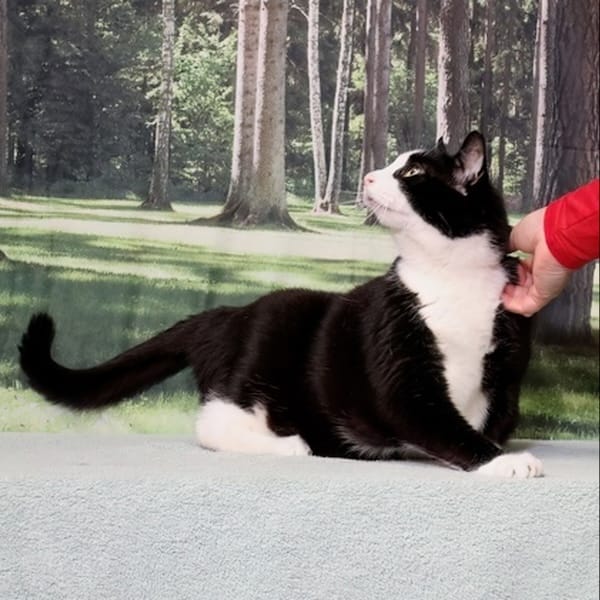
Cookie is a chatty tuxie currently living at the Brandywine Valley SPCA in Pennsylvania. The shelter reports that she's a very friendly, "sweet-as-sugar cutie!" She's around three years old and in that time, she's had plenty of opportunities to eat cookies—possibly a few too many, because she'll need some help losing weight for her long-term health and wellbeing in her new home. If you have a pet of the week nomination from a shelter or rescue in your area, you can email POTW at allmydeadcats.com.
Those conversations let your kid express themselves and decide how much of a role they want to play. For some children, it’s actually upsetting and traumatic to not be there for euthanasia, to not be allowed to see or interact with the body. Some kids might want some sort of ritual or ceremony with the body or to participate in selecting flowers to plant over the body or choosing an urn. Other children have absolutely no interest in any of that. You won’t know the answers to any of these things until you talk about them, and that’s a conversation you don’t want to have at 9pm when the vet is coming at 8:30am.
Invite your kid to ask questions and be willing to reply “I don’t know” or “I agree, it’s not fair” to questions like “but why?” Or “I don’t know the answer, but I’ll see if I can find someone who does.” Sometimes people of all ages perseverate on a specific detail, so you may find yourself getting some repeat questions, including potentially upsetting ones. As a reader, I have to give a shoutout to Caitlin Doughty’s Will My Cat Eat My Eyeballs?, which may make you feel better prepared for some of the truly unpredictable questions your kid could ask, or at very least less alone as a parent when you get an off-the-wall question.
Make some time for yourself in grief too when the time comes. A grieving child, especially if it’s your child’s first big loss, is a big deal, and it sucks to see your kid hurting and not be able to fix it. But you will also probably be grieving—the loss of your cat, but also the grief of watching your child grow up and experience things that are out of your control. Parents sometimes feel like they are unable to sit with and process their own grief. I know it can be really challenging when you’re leading a busy life, but you gotta put on your oxygen mask so you can help others. I hope you have family and friends who can help you out—I have a memory, for example, of one of my father’s friends taking me for a long walk after his father died so he could get a little breathing room.
I’m willing to bet that some of your fellow parents are going through this, have gone through it, or are thinking about it. A non-crisis moment is a great time to open up this conversation and get (or give) some peer support. If the topic doesn’t come up in your friend group, maybe this is a good time to change that. Don’t feel like you need to have a book club or a discussion group or other formal event to talk death—all days ending in Y are good ones to discuss life, death, and the spaces between.
Tell your cat I said…
Death is inevitable, but it doesn’t have to be scary
Head on over to submit a question and find resources including pet loss hotlines, quality of life assessment tools, and information on financial assistance with veterinary costs.