Does being scared of euthanasia mean I shouldn't become a vet?
Dear s.e.,
I’m getting ready to apply to veterinary medicine programs to fulfill my lifelong dream of becoming a veterinarian, but I’m really worried about something: Euthanasia. I love everything else about the veterinary clinic where I’m working to get practical experience, but every time we have a euthanasia, it just tears me up inside. I just don’t know if I can do it. How do veterinarians deal with this? If I can’t handle it now, am I making the wrong career choice?
Waffling in Washington
Hey there, Waffling!
I am crossing my fingers for admission into the vet school of your choice—and blessings from the scholarship gods—because you are making the right career choice. From the tone of your letter, I’m guessing your unease around euthanasia is about your empathy, and empathy and kindness are essential traits for good veterinarians. You’re going to be a great vet, whether you go into large animal, small animal, exotics, livestock, zoo, or any other kind of practice.
I’m not going to sugarcoat it: Euthanasia is hard, and there’s no magical point at which it gets easy, although your emotions about it will definitely evolve over time and with experience. Even in the most ideal circumstances, it’s a big deal, whether you’re talking about a family pet, a shelter animal, a zoo resident, or another kind of clinical relationship. Sometimes it can feel more like moral injury—being asked to do something that violates your beliefs or ethics—than a kind ending to a life well-lived, and that can be tough to reckon with.
You aren’t alone in feeling distressed about euthanasia and wrestling with how you might approach it in your practice, and feeling this way doesn't mean you're not cut out for veterinary medicine. More veterinary schools are starting to integrate mental health supports into their curricula and training programs to help students with issues like this. You might want to check those programs out, and ask vet students and recent grads about them while you’re researching schools to apply to, because some are definitely better than others, and you should be in an academic setting that supports you as a whole person.
I’ve interviewed a lot of veterinarians and veterinary technicians about euthanasia, in addition to being present at, though not performing, a lot of euthanasias. Whether you’re talking about an animal you’ve known across their whole life in private practice or a critically-injured stray brought to a shelter, euthanasia is an intimate experience. But it doesn’t have to be a scary one. It’s not even always a sad one.
Send your future self a present: Preorder my book, All My Dead Cats and Other Losses: Practicing Good Grief in a Culture That Fears Mourning. Send me proof of your preorder and you'll get some fun stickers in the mail!
When I talk to people in veterinary medicine about euthanasia, many agree that while it can be sad, it’s also an honor and a privilege to ease animal suffering. It’s important to them to make sure it’s done well and with kindness, and they start from the same place of empathy for pets and people that you do. Interestingly, many of those in euthanasia-based practices were also very worried about euthanasia earlier in their careers and ended up finding it so fulfilling and meaningful that they decided to make it their full-time job. (This doesn’t have to be you!)
You might be surprised by how your relationship to euthanasia evolves once you’re a practicing veterinarian.
To start with, it may be reassuring to know that the number of euthanasias you’re involved in may actually be pretty low, depending on what area of veterinary medicine you go into. Unless you’re running a euthanasia-based practice or you’re a hospice and palliative care provider, it might end up being a pretty small, though still essential, part of your job. For example, you might not want to be an emergency vet; it’s fast-paced, can be traumatic, and when you’re seeing people at 4am, it often ends in a sad outcome. But you could make a great orthopedic surgeon or ophthalmologist, where it's not a routine part of practice. In veterinary school, you’ll have a chance to explore specialties and see if something is calling your name.
It can also help to think of euthanasia as less of a final option or giving up when everything else has failed and more as part of the full spectrum of treatment and care that you offer. It may be the last treatment you provide, but it’s not the last resort. A “good death” can be an important part of the continuum of care for an animal. As someone who has witnessed a lot of natural deaths that were, contrary to popular belief, not “peaceful” and did not involve simply curling up on the dog bed at night and not getting up in the morning, I know how kind euthanasia can be. Euthanasia really is an opportunity to prevent fear, pain, and suffering.
When I talk to pet guardians about euthanasia, the most frequent regret I hear is that they waited too long—an empathetic vet like you can work with pet guardians to help them make informed, kind decisions about their pets’ end of life and make that experience better for them. And it’s still okay to be emotional about it! You can tell people that you’re sad about this too when you’re discussing options; you don’t need to be an automaton. People telling me about positive experiences with euthanasia often tell me about how the empathy and kindness from members of the vet staff meant a lot to them, including tearful farewells from staffers who had grown to know their pets over many years.
Your care and concern as a veterinarian will also be reflected in your care for your staff, who will have their own feelings. That might mean scheduling euthanasias at the end of the day so people don’t feel like they have to swing immediately back into work, keeping a memorial wall for clients, or pausing after a euthanasia to let everyone breathe before carrying on with their days.
Keep those tough feelings you’re having now as you move into your career in mind as you think about how to support the people around you. If there are things your current job is doing well (...or not), think about how to apply those after you graduate.
You ask how vets deal with it, and the answers are highly varied and deeply personal. We’re finally starting to move past an era when veterinarians are expected to be stoic and bottle up their feelings—it is undeniable that there’s a higher rate of suicide among veterinarians and euthanasia can contribute to the trauma that weighs on people’s shoulders. That’s not a feeling you want to keep to yourself or try to force yourself to “just push through.” Veterinarians deal with it by asking for help and knowing they’re not alone.
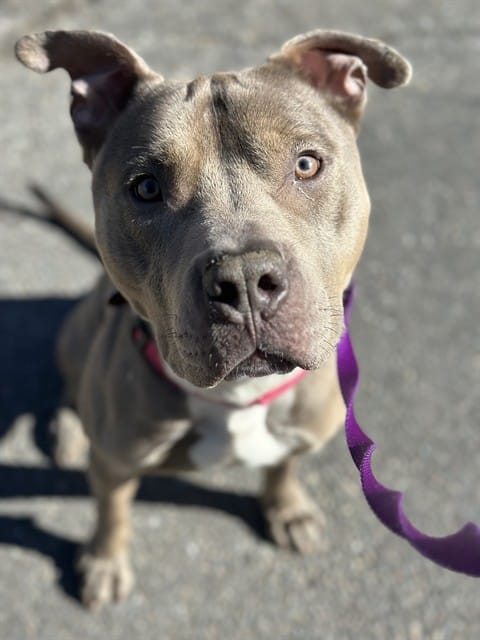
Luther is in foster care via the Animal Rescue League of Boston's Dedham Shelter, where staff say he's goofy, playful, and easy to please. At around two years old, he has a lot of potential ahead as a running partner/couch potato and general land shark. The shelter and his foster are still learning more about him, including how he feels about other animals, so contact them to get the latest info and set up a meet and greet. If you have a pet of the week nomination from a shelter or rescue in your area, you can email POTW at allmydeadcats.com.
Those mental health supports I mentioned go beyond vet school. Not One More Vet, for example, advocates for better access to mental health services and reforms in the profession. Having a therapist who’s familiar with veterinary medicine and the unique challenges you face can be a huge help; at some larger vet practices and hospital systems, social workers also play a role in counseling and supporting not just clients, but staff.
Since you’re already getting practical experience at a vet clinic, you probably know it can be helpful to be surrounded by people who know what you’re going through and share your experiences. Professional organizations, forums, and casual meetups can be a great way to build up a peer support network. The climate in those spaces can be wide-ranging and it might take a few tries to find one that works for you—as a fan of dark humor, for example, I know that’s not for everyone, and it's okay to bail on a space where the vibes don't feel right.
Finding ways to take care of yourself, including making sure you have a life outside of work, is really important too—and something to think about as you start applying for jobs, because some clinics are better about work/life balance than others. Think about things you find joy in now, and how you want to integrate those into your life. Maybe that’s running, travel, embroidery, writing fanfic…keep these things and their communities in your life so it’s not all vetmed, all the time.
Don’t be too hard on yourself here: You’ve spent your whole life wanting to be a veterinarian, and your fears about this aspect of the job are completely valid, but they aren’t a dealbreaker. I think you have a bright future ahead of you, and your clients (human and animal) will be lucky to have you.
Tell yourself I said…
You got this!
Head on over to submit a question and find resources including pet loss hotlines, quality of life assessment tools, and information on financial assistance with veterinary costs.