
How do I volunteer at an animal shelter without taking them all home?

Dear s.e.,
This isn’t a pet loss advice question so much as a pet gain question, so I hope it’s okay. I am thinking about volunteering or maybe fostering at my local animal shelter, but I’m scared that I will end up wanting to take them all home. I know you volunteer at your shelter, and I’m wondering how you deal with this!
—Future Foster?
Hey there, Future Foster!
Volunteering and/or fostering for your local animal shelter is a great act of service for your community and it’s also incredibly personally rewarding, so I encourage you to turn these thoughts into action. That goes double if you can handle larger dogs, neonates, and other populations that shelters can struggle to serve, particularly if they are busy municipal shelters. If you are willing to take on animals who require more extensive medical care, or fospice cases, you can be a true animal hero.
You genuinely won’t regret it, even if it’s sometimes very challenging.
“What will I do if I want to take them all home” is a really common question, especially since every time you look around at people working in vet clinics and animal shelters, they seem to have a million animals, many bedraggled and besieged with a series of complicated health issues.
If the pros can’t resist, how can you?
Want more like this? Subscribe to make sure you get more Tell Your Cat I Said... advice in your inbox every week!
I feel pretty uniquely qualified to answer this question. I have two cats, the most number of cats I’ve ever had at one time is three, and I’ve been working and volunteering in and around animal shelters and veterinary clinics for almost 30 years. And yes, one of my cats is a shelter cat that I took home to foster who never went back to the shelter, but that’s because I had been thinking about getting a second cat and wanted to test the waters first.
It’s not that I haven’t met shelter animals I grew deeply attached to and think of fondly, from Goliath the dog (a big and delightfully goofy guy who spent too long in the shelter because of his size) to Sid and Magoo, a bonded pair of cats (a playful, mischievous pair who found kindred spirits in each other). I’ve met and worked with hundreds (possibly thousands?) of animals, the vast majority of whom were really lovely, and built deep bonds with some of them. The same goes for many people who foster, volunteer, and work in shelter environments and vet clinics—including the ones who have, believe it or not, no pets at all.
Send your future self a present: Preorder my book, All My Dead Cats and Other Losses: Practicing Good Grief in a Culture That Fears Mourning. Live in the South or thereabouts and want to support a local indie? I'm partering with my friends at Book People in Austin on a preorder campaign: Order through them and get a signed bookplate, stickers, and a cute pin while supplies last!
I keep in mind that ultimately this work is about love of animals and sharing that love with other people. I support my local shelter because I care deeply about animal welfare, and also want everyone to have the joy of animals in their lives. I absolutely adore being able to facilitate perfect matches between pets and people. It’s definitely bittersweet when an animal I have a connection with is adopted, even more so for staff; we’ve had dogs who have spent years at the shelter, for example, and start to feel like the employees' own pets, so seeing them get adopted is definitely a happy tears moment.
But I don’t want my house to turn into a hoarding situation where I’ve convinced myself that I and only I can care for these animals. That’s a really common phenomenon in animal welfare, and it’s easy to slip into if you’re not careful.
Knowing your limits is a really important part of this equation, too. You have to be both honest and really clear about them. We live in a culture where people treat boundaries as friable or take a “well, just one more won’t make a difference” tack, and you don’t want to do that to fellow living beings.
It wouldn’t be fair to bring animals home if I couldn’t give them the care and quality of life they deserve. For example, my house isn’t well suited to a large breed or very active dog; Goliath would have been miserable with me, and a cattle dog would be climbing the walls inside the week. And while I work from home, so a dog wouldn’t spend their life cooped up, I’m not quite as active as a dog deserves; the thought of picking up dog shit makes me want to vomit to the point that I gag when walking with friends and THEIR dogs; dogs require a lot of training that I’m just not equipped to provide; and I’m sorry, but I really can’t hang with small, yappy dogs. I’m very much a “loaner dogs only, thank you” person.
Sometimes the best way to express love is to know when to open that kennel door and watch a pet walk out into the arms of a person who will honor, care for, and spend the rest of their life with them.
And when it comes to cats, I want to make sure they get individual attention, enrichment, and playtime, while living in a house where they can be active, happy, and not constantly stressed out by too many cats in too small a space. I can offer that to two cats. I can’t do it for five. And given the high costs of veterinary care, I would really struggle to make sure their health needs were met and they live the best lives possible. So, while I enjoy hanging out with shelter cats, I know it wouldn’t be right to adopt them—I'd just be turning my house into another animal shelter, without the support staff and volunteers to help care for my pets.
What I CAN do is get to know these animals as individuals, learn about their personalities, see how they interact with other people and animals, and help them find the perfect home. I can also do outreach and education to make sure members of the public get their pets spayed and neutered; know where to find vaccines; can find information about help with food and health care expenses; and receive other support that they and their pets need.
If you're worried about taking pets home or keeping foster animals, this is a good time to sit down with yourself and think about what getting a pet would look like. I’d counsel you the same way I would counsel anyone coming to the shelter to adopt, because that’s exactly what you would be doing.
How confident and comfortable do you feel about making this commitment? How much time do you have for exercise, play, and other activities? Do you travel a lot, and if so, how do you handle pet care while you’re gone? If you’re thinking about a dog, are they going to be living an active life with you, or cooped up at home a lot? Have you checked out prices for basic veterinary care lately, and are you equipped to cover them? What will you do if your pet has an acute, severe injury or ongoing chronic illness? If your pet ends up having allergies or needing to be on a prescription diet, are you aware that can get quite expensive? Can you provide regular and consistent dog training? How patient are you with issues like peeing outside the litterbox or dealing with a dog that simply will NOT stop jumping on people no matter what you do? How will other members of the household integrate with a pet?
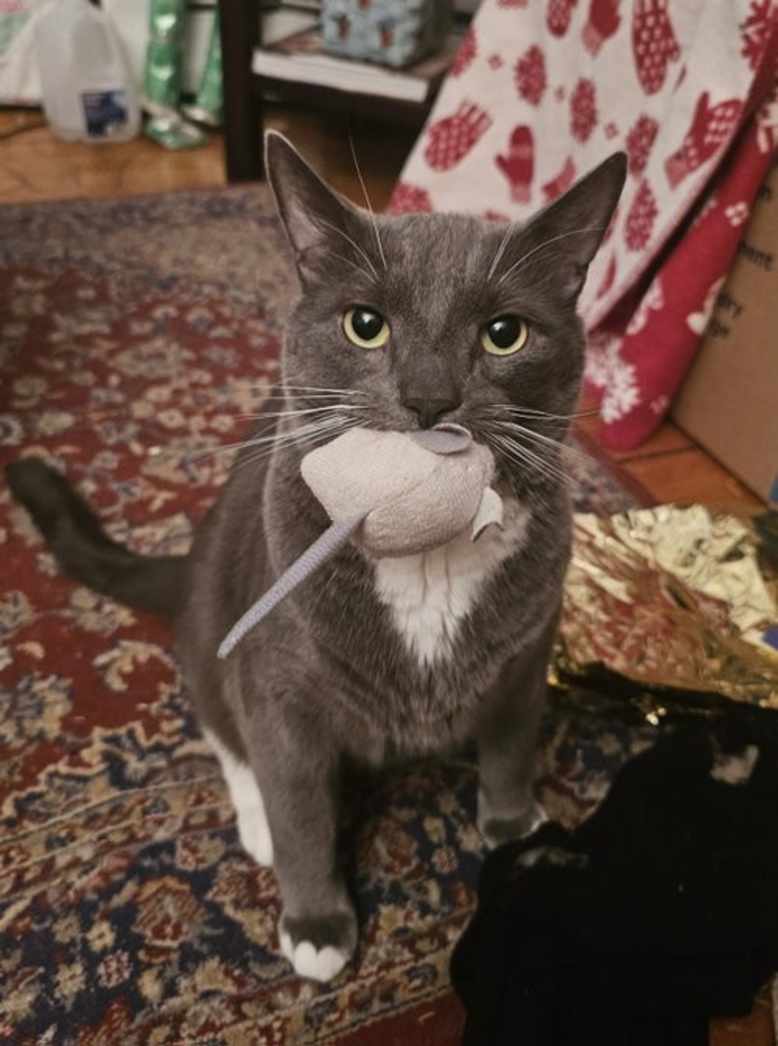
Bruce is in the care of Black Cat Rescue in the Boston area, where he's currently in a foster home. He's an independent seven-year-old who likes to lead life on his own terms, but once he gets to know you, his affection blossoms. His fosters say he's very polite and gentle, but would definitely prefer to be your only cat. If you have a pet of the week nomination from a shelter or rescue in your area, you can email POTW at allmydeadcats.com. (Fun fact: A reader nominated a different cat from Black Cat Rescue, who was adopted before I was able to feature her!)
The answers to those questions are important. They’re going to determine whether you can take on a pet and give them the life they deserve. I’m not going to lie and say I haven’t had close calls; thought about well, another cat might be fun; or worried about what might happen to an animal I love in a new home where I’ll probably never see or hear from them again—although I do meet a lot of shelter dogs when I’m out walking.
But sometimes the best way to express love is to know when to open that kennel door and watch a pet walk out into the arms of a person who will honor, care for, and spend the rest of their life with them. Maybe it’s a tree worker who’s thrilled to have a dog who keeps them company during the day; an elder who just lost a spouse and wants a calm, quiet older cat to keep them company; a family getting their first kitten; a couple adopting a dog together; someone moving into their first apartment; a brewery looking for a working cat; or any number of other people.
You just can’t take them all home, no matter how much you want to, and that’s the energy to carry forward into volunteering and fostering. You will fall in love with animals. Some will have really heartbreaking, complicated stories. There will be some bad and sad endings. These are realities that will happen with or without you, but with you, those animals will lead happier, fuller lives. And you’ll also get a chance to engage with members of your community in new ways, and might make new friends.
It’s also worth noting that volunteering doesn’t always have to be hands-on with animals all the time if you’re worried. Your shelter probably needs administrative support; someone to do laundry (it never ends); help organizing toys and donations and whatnot; assistance with event planning and execution; help with graphic design and promo; someone willing to cold call donors; and so much more. If you have professional skills, donating those can be a huge help too—maybe you can write the shelter's newsletter, get their website into the 21st century, or photograph adoptable pets. People tend to think of this kind of stuff as less fun than playing with kittens and rolling around with puppies, so shelters often have a shortage of these kinds of volunteers. When you need a little break from working directly with the animals, you can still support the shelter overall.
There’s so little we can control in these horrid times, and we are surrounded by so much need that it can feel, at times, a little overwhelming. Doing a small kindness for a fellow living being is worth it, even if opening your heart also exposes it to the risk of breakage. Ultimately, a life worth living is one in which you may experience both joy and sorrow, but you can look back on your life and feel proud of the things you accomplished and the people, and animals, you helped.
Tell your shelter I said…
“What's the process for becoming a volunteer?”
Head on over to submit a question and find resources including pet loss hotlines, quality of life assessment tools, and information on financial assistance with veterinary costs.